
Dr. Rick Capezza Receives U.S. Army Chaplain Corps Highest Civilian Honor
National leader in clinical pastoral education and spiritual care formation recognized at Camp Rilea for exceptional, sustained support to chaplain development across the United States Armed Forces.
Press Release
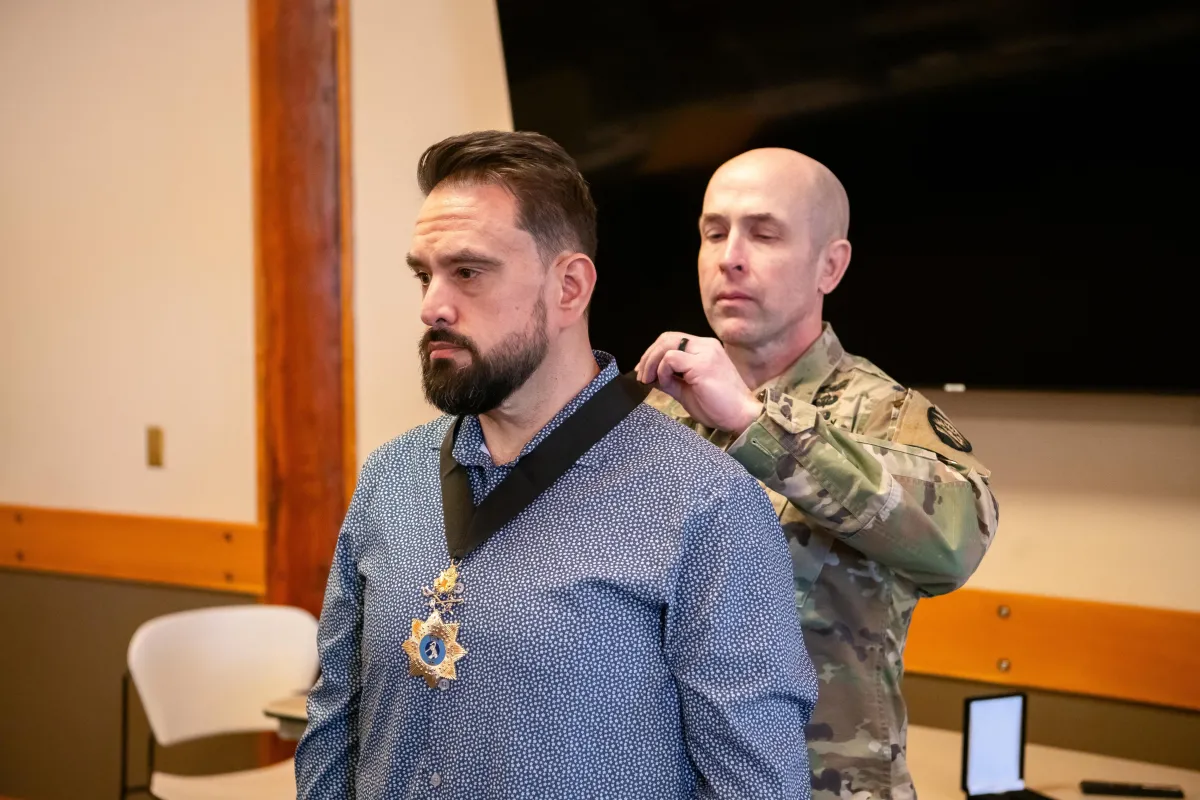
Camp Rilea, Ore. — March 9, 2026 — Dr. Rick Capezza, a national leader in clinical spiritual care formation, was awarded the Order of Aaron and Hur, the highest honor awarded by the U.S. Army Chaplain Corps to a civilian, during a ceremony held at Camp Rilea Armed Forces Training Center as part of an extended Army National Guard chaplain training event.
The award recognizes individuals who have provided exceptional, sustained support to the mission and effectiveness of the Chaplain Corps. Named after the biblical figures who supported Moses during battle, the honor is reserved for those whose contributions strengthen the spiritual resilience and care capacity of military personnel over an long period of time.
Dr. Capezza was recognized for his extensive impact on chaplain formation within the US Army.
Through his leadership of Concordia Clinical, Anam Cara CPE, The Center for Integral Spiritual Formation, and The School of Military Spiritual Formation, Capezza has helped educate chaplains in every branch of the U.S. military, including nearly 1,000 chaplains within the United States Army National Guard.
"Chaplains carry people through some of the hardest moments of their lives. I've given my life to making sure they're well formed, and I'm grateful for the reach that's come from that work."
The award was presented by Oregon State Chaplain (COL) Jacob Scott. During the ceremony, Chaplain Scott remarked on the rarity of the award, noting he had never personally witnessed its presentation.
Chaplain (LTC) Lance Sellon, who served as a speaker during the training week, shared that he was moved to nominate Capezza following a conversation with a senior Navy chaplain emphasized the significance of Capezza's contributions throughout the US Armed Forces, not just the Army. The broader training event reflected this reach when guest instructors from both the Air Force and Space Force, present to train Army National Guard chaplains during the week, noted that they were also among Capezza's former students—an indication of his influence across generations of chaplain leadership.
Capezza's work, who began training military chaplains in his home state of Idaho before expanding to train military chaplains throughout the nation also extends into civilian contexts, including correctional and healthcare chaplaincy, where his programs continue to shape the training and professional development of spiritual care providers nationwide.
The ceremony highlighted the scope of Capezza's contributions—developing leaders, systems, and programs that strengthen the care provided to service members and the institutions that support them.